
(I try to make it interesting…)
tl;dr version: I don’t use Generative Artificial Intelligence, or Large Language Models, or anything connected with these. I even turn off the grammar check and I occasionally have issues with spellcheck.
I will never use AI in the writing process. Never.
Living in the Future
Teenage me would have loved the fact that I am having to write this document. He was very much into cyberpunk, whether the works of William Gibson or the roleplaying game Cyberpunk 2020 (now repackaged and better known as a computer/console game, Cyberpunk 2077). Artificial Intelligence is something I’ve long been interested in, long imagined, long read about.
However, to be living in the now—in the future—in a world where unscrupulous, greed-driven Dark Triad types have stolen the words and images and art of an entire species, then reframed this as something you need to pay to use—is not just alarming and deeply concerning, but also mildly ridiculous.
People keep saying we can’t now use the em-dash. We can’t do this, or that, any longer; to do so will simply make others believe we use GenAI in our work. Again, ridiculous. I’m rapidly approaching half a century on this planet, and I’ll write how I want to write—how I’ve developed my style, my voice over those decades of work.
We should place deliberate typos to ensure any machine check on our work shows it is not produced by a machine. I will redraft (quite often, many times), edit and edit again (again, several-to-many rounds of edits), then a final proofread and format before I send a letter (or finish a creative piece or project). Will I leave in any typos I spot, or place some there if I can’t find any? No, don’t be silly. (I’ll do my very best to ensure there are none, all the while operating under the knowledge that the best way to ensure there are is to hit publish, then casually reread my work again a few days later.)
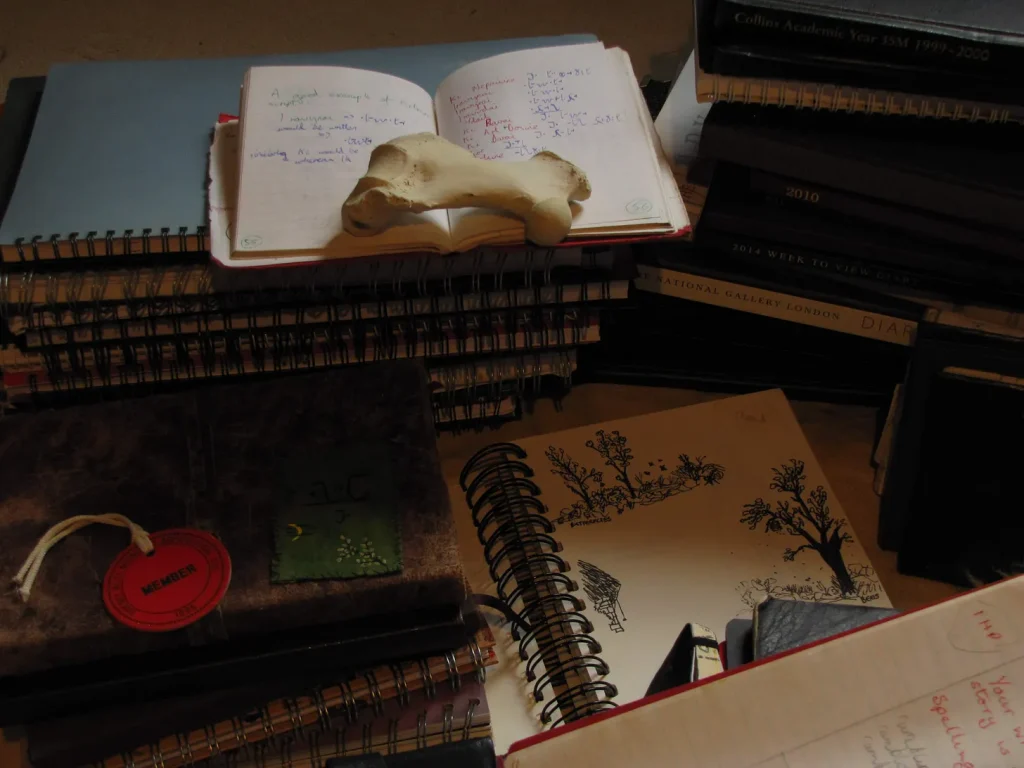
I have shared my thoughts on AI before in my letter The 3rd State of the Nest Address (a piece discussing publishing on Substack for six years), when I said the following, a long quote, but my position has not changed on the matter:
The Grubby Elephant In The Room
From the outset, I think I will mention one of the biggest changes I’ve seen over the past year on Substack, a topic I have not really touched on in my writing, yet, and that is the rise and increasing proliferation of generative Artificial Intelligence and Large Language Models. Artificial help for ideas, drafting, or editing, or all of these. It is a contentious issue; some people believe it can help them write or edit and, if that’s you, then you do what you need to do.
I want to make it clear here that I do not use generative AI. I never have, never will. Why? Well, I don’t need to. Why not? Because I’ve put in the time—lots and lots of time—and the considerable effort to get to a point where I am comfortable sharing the fact I know I am a good writer. (And yes, of course I have doubts, yes, of course I have moments when I wonder if anything I’ve ever shared has been worth it but, on the whole, I am very happy with where I am with my work.)
Generative AI is destructive. There’s no sugarcoating that. If you believe it to be useful, then you will continue to believe that—I very much doubt anything I say will change your mind. I believe such AI is destructive for two reasons.
Firstly, the energy1 use from server farms powering these systems is growing exponentially and, quite literally, fatally. At a point when we are reaching tipping points in our climate—tipping points which will mean an almost unfathomable change in the near future of our species—and, indeed, when this year we have quite possibly passed the first of these nine (warm-water coral reef die-off), why then are we vastly increasing our energy needs, just to ask often inane questions—and receive answers which are not always true and, sometimes, dangerously untrue—of a machine?
Secondly, such AI is destructive for the writer. It is a cheat, a shortcut which might shave time off the walk, but it does so at the expense of the very viewpoint or peak the walk was taking you towards in the first place. You do not master a thing by cheating—again, if you disagree, that is fine, that is your choice, but I have not yet read a single argument that can convince me otherwise. Whatever ideal of excellence you subscribe to, not one of these can be achieved by using such shortcuts.
No mastery of anything can.
(Personally, I am of the opinion that the very best masters are always students of their subject, rather than a finished product; no true master I have ever met has advertised themselves as such, and studying is not something we should cheat at—that helps no one.)
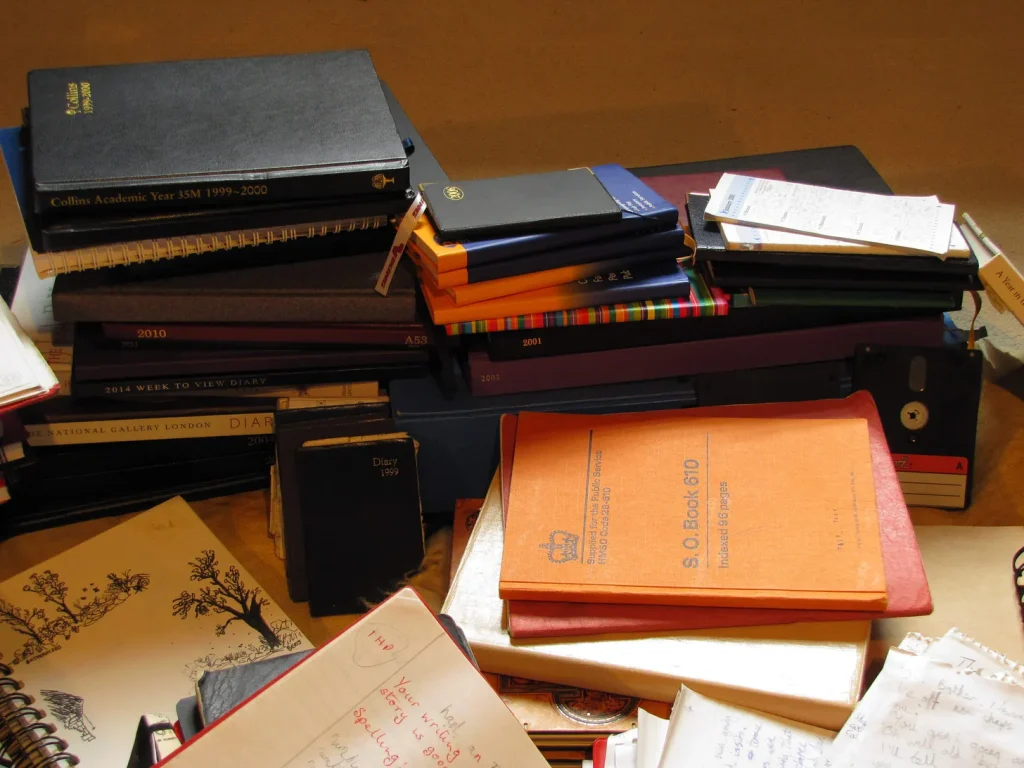
You will never be a superb writer if you don’t hike up metaphorical mountains to witness those hard-to-reach viewpoints.
I find the whole idea to be deeply sad. I wonder how many writers who are using AI to ‘craft’ their content could have become truly amazing, if only they had not relied on a crutch. Too often, this is the way—I’ve been at this writing game for a long time now (and not exactly secured a fortune although, as I often tell myself, reliance on economical scales of success is never reliable), and I do know that, when I want to say a thing, I can do so, myself, without machine aid beyond that provided by the red lines beneath my typos or misspellings, or the ability to store, access, and reorder my thoughts made possible by e.g. Scrivener and Obsidian—or a good, old fashioned notebook, of course.
I do need to take a moment to also mention how I think it unfair that many people talk about AI solely from the perspective of generative AI, whether ‘art’, video, or words. AI is so, so much more than that, and some of the things that it can do—and IS doing—are simply remarkable, especially in the world of science and medicine, for example.
All of which is to say, the slop we’re being fed from so many different directions, diluting the wonder of the internet—even beyond the already diluted state it is in thanks to ‘SEO content writing’—does not taste nice to me—and do not get me started on the texture.
Then there’s the issue of ownership—many of the GenAI platforms have cunning wording in the small-print you agree to when you sign up which, in short, makes it unclear who actually owns the prompts you use, and the outcome the AI provides. Ironic, really, given that they are usually trained on stolen material.
I know I will have upset a few readers by saying this, but I do think I needed to do so. I cannot condone the use of such tools when the damage they wreak is so vast for the world and the (potential) writer both. (And I have barely mentioned their incredibly illegal and unethical software training programmes.)
However, perhaps perversely, when many seem to want to take up generative AI as the new saviour of ‘their’ work, perhaps that might not a bad thing for me? My words are my own, the way I write reflects the time I have put into finding my voice and honing it. And the way I craft each and every piece reflects this.
I see other writers not as competition, but as colleagues, which is how it should be, but I have to admit that, when I see AI drafted work—so obviously AI-drafted it is painful to the eyes and soul—then, sometimes, I smile a wry smile. Colleague they could arguably still be (but then I’m not entirely sure of that, either), but competition they certainly are not.
Probably thanks to my cultural upbringing, I do feel a creeping urge to apologise for the above. I don’t usually like to rock the proverbial boat too much, in this space or any other, beyond occasionally/regularly reminding readers that we are firmly heading for a very, very dark place, thanks to our species’ ongoing desire to burn the only home we have to cinders. However, I would have done this piece, myself, and you a disservice if I had not at least touched on the subject.
Short tl;dr version of the above: I do not, and will not, use generative AI for either drafting or editing or images. Nope, no, never.
(That’s the end of that quoted piece. I stand by all I said last year.)
An Axe-Related Metaphor. And More.
In addition to the above, there’s also this crucial point: GenAI is a much worse writer than I am. Much worse. As I mentioned, I’ve seen so much slop appearing across the internet in the last couple of years and, as far as I can see, in general it ain’t getting better.
I know some people love to use AI to help with ideas, or perhaps to see patterns in their own work (fed into the machine, stolen and reused by said machine) and, if that’s you, I’m not going to tell you to stop. There’s only you who can do that and, I suspect, if you are using GenAI already, you wouldn’t listen to a word I say anyway.
However, I’d be remiss not to mention once again the damage GenAI is doing—to the environment, certainly, but here I’m more concerned about you, about the damage using a machine to do the hard work does to the writer.
I’m lucky, in that I learnt to write the old fashioned way, by using my brain. When you are using a synthesised brain based on patterns stolen from the work of others, that’s not your work. You are not developing as a writer; you will never develop as a writer.
The way we get better at things is by doing them. You are never going to be be able to brag about making it to the top of, say, the famous cycling climb of l’Alpe du Huez if you did it on an electric bike.
My Mum likes to tell a story, about when I was once chopping kindling with a hatchet, many years ago. The head got stuck and I yanked at the handle to free it, which it did—and flew straight back at me, hitting me squarely in the middle of my forehead. It hurt. It hurt a little more and a little less, at the same time, when I heard my Mum from the kitchen window behind me, laughing uproariously.
Since then, I learnt axe work by reading, by watching, a little by trial and error and, most of all, by doing—but always carefully, oh so carefully. I’ve since felled large trees with my axe, I can limb, I can split, I can carve. I’m good with an axe, whether with one hand or two (or no hands, head lodged to act as a static blade) whilst well aware I still have more learning to do: and I’ve not hit or cut myself ever since.
We get better by doing, we develop by practice, by learning to sharpen a blade, learning to keep your brain sharper, by learning the heft and feel of a thing, whether a word, a sentence, or a paragraph, a whole novel—or an axe. We learn through doing these things over and over, repetition honing, repetition locking something within us which becomes instinctive.
AI is not a shortcut to learning to write, it is a shortcut to blunting the very skills you need to learn to write.
And there is my AI policy of sorts. If you made it to the end, thank you for reading. I am going to send this policy out to my subscribers as a letter, then pin it somewhere obvious on my homepage.
As almost-always, the above images are my own photography. I find it sad that other writers, who would never dream of using GenAI in their own work will happily use GenAI pictures without a second thought—there are so many other options available.
When I shared this piece, I forgot to mention the extreme water use, too—that there are places suffering drought, crops dying, but server farms/data centres functioning well, thanks to their cooling use of the water they take from local fields, local gardens, local taps/faucets is, frankly, disgusting.